

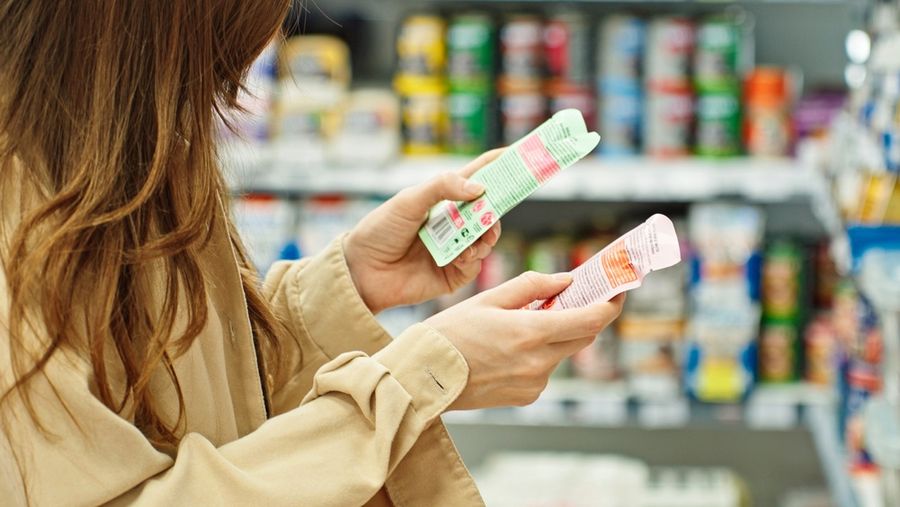
Nutrition labels can look like a wall of numbers when you’re standing in a busy grocery aisle. Calories, percentages, grams, serving sizes, and unfamiliar terms all compete for attention, but you don’t need to study every line to make a useful choice. A few parts of the label tell you far more than others. Learning where to look first can make comparing foods faster, help you spot misleading portions, and give you a clearer picture of what you’re actually eating.
Always Check the Serving Size First
Start at the top of the Nutrition Facts label. The serving size tells you how much food all the numbers below it represent. Serving sizes reflect amounts people typically eat or drink at one time, not a recommendation for how much you should consume.
That distinction matters. A bag may look like one snack but contain two or three servings. If the label lists 200 calories per serving and you eat two servings, you’ve actually eaten 400 calories. The same multiplication applies to sodium, added sugar, saturated fat, fiber, and other nutrients. Before looking anywhere else, compare the listed serving with the amount you’ll realistically eat.
Put the Calorie Number in Context
Calories tell you how much energy a serving provides, but the number alone doesn’t reveal whether a food is nutritious. Two foods with similar calories can have very different amounts of fiber, protein, sodium, vitamins, added sugars, and saturated fat.
Instead of deciding that a food is "good" or "bad" based only on calories, consider what you’re getting for them. A snack containing protein, fiber, and useful nutrients may keep you more satisfied than another product with similar calories but mostly refined starch and added sugar. The label uses a 2,000-calorie diet as a general reference for nutrition information, but individual calorie needs can vary. Think of calories as one part of the picture rather than the entire story.
Let Percent Daily Value Do the Math
The % Daily Value, or %DV, is one of the easiest ways to understand a label without memorizing recommended amounts for every nutrient. It shows how much one serving contributes toward a full day’s reference amount.
A simple rule makes %DV easier to use:
|
Percent Daily Value |
What it generally means |
|---|---|
|
5% DV or less |
Low |
|
6% to 19% DV |
Moderate |
|
20% DV or more |
High |
The 5% and 20% benchmarks can help you quickly compare foods and decide whether a serving contains a little or a lot of a nutrient. For example, 3% DV of sodium is fairly low, while 25% is high. The same shortcut works when checking fiber, calcium, added sugars, and saturated fat.
Pay Attention to Saturated Fat and Sodium
Two numbers worth checking regularly are saturated fat and sodium. You don’t need to avoid either nutrient completely, but packaged foods can make them add up quickly across the day.
Use %DV instead of focusing only on grams or milligrams. A frozen meal with 35% DV of sodium uses more than one-third of the daily reference amount in a single serving. If the meal contains two servings and you eat both, the total doubles. Nutrition labels are designed to help shoppers choose foods with less saturated fat and sodium while staying within their overall daily needs. Compare similar products side by side. A lower-sodium soup or lower-saturated-fat frozen meal may taste just as good while leaving more room for other foods during the day.
Know the Difference Between Total and Added Sugars
The sugar section can be confusing because it lists both total sugars and added sugars. Total sugars include sugars naturally present in foods, such as the lactose in milk, along with sugars added during processing.
Added sugars are listed separately underneath. They may come from table sugar, syrups, honey, concentrated sweeteners, or other ingredients added to make a product sweeter. Foods such as plain fruit and milk contain naturally occurring sugars that aren’t counted as added sugars. Pay particular attention to added sugars in flavored yogurt, cereal, granola bars, sauces, coffee drinks, and snacks. A product can contain fruit and still have a significant amount of sugar added during manufacturing.
Look for Fiber in Grain and Snack Foods
Fiber is another number worth checking, especially when comparing bread, cereal, crackers, tortillas, pasta, and snack foods. Foods that look wholesome on the front of the package can vary widely once you turn them around.
Use the %DV shortcut again. A product with 20% DV or more of fiber per serving qualifies as high based on the general label-reading benchmark, while 5% or less is low. Dietary fiber is one of the nutrients consumers are encouraged to get more of when comparing Nutrition Facts labels.
Fiber can also come from beans, lentils, fruits, vegetables, nuts, and seeds. Packaged food doesn’t need an enormous fiber number to fit into a balanced diet, but comparisons can help when two products otherwise seem almost identical.
Check Protein, but Don’t Judge a Food by Protein Alone
Protein is prominently advertised on many modern snacks, cereals, drinks, and frozen meals. The grams listed on the Nutrition Facts label can tell you how much you’re actually getting rather than relying on bold wording across the front of the package.
Still, protein shouldn’t be the only deciding factor. A bar with 15 grams of protein may also contain a large amount of added sugar or saturated fat. Another snack with less protein might offer fiber, nuts, seeds, or whole grains. Look at the product as a package. Protein can be useful for building balanced meals and snacks, but a higher number doesn’t automatically make one food healthier than another. Consider the serving size, calories, added sugars, sodium, saturated fat, and fiber alongside the protein grams.
Understand What the Fat Numbers Mean
Total fat includes several types of fat, so don’t stop at the first number. Look underneath for saturated fat and trans fat. A food can contain a moderate amount of total fat while remaining relatively low in saturated fat. Foods such as nuts, seeds, avocado, olive oil, and nut butters naturally contain fat, much of it unsaturated. That means a higher total-fat number isn’t automatically a reason to avoid a food. So, context matters.
The Nutrition Facts label specifically identifies saturated fat as a nutrient to limit rather than recommending that consumers simply minimize all dietary fat. When comparing two similar products, check saturated fat rather than relying on "low fat" marketing alone. Also remember that some reduced-fat foods compensate with extra sugar, starch, or sodium.
Read the Ingredient List When You Need More Detail
The ingredient list isn’t technically part of the Nutrition Facts panel, but it can answer questions the numbers can’t. Ingredients are generally listed from the greatest amount to the smallest amount by weight. That makes the list especially useful when shopping for foods such as bread, cereal, granola, sauces, or nut butter. If you want a whole-grain bread, for example, check whether a whole grain appears near the beginning rather than relying only on brown coloring or words such as "multigrain."
The ingredient list also helps people identify allergens or ingredients they choose to avoid. Don’t assume a long ingredient list automatically means a food is unhealthy, though. Length alone says very little about nutritional quality. Use the ingredient list to answer specific questions rather than treating unfamiliar words as automatic warning signs.
Don’t Let Front-of-Package Claims Make the Decision
Food packaging is designed to catch your attention. Words such as "natural," "protein," "light," "multigrain," or "made with real fruit" may sound appealing, but the Nutrition Facts panel gives you a better way to compare what’s actually inside.
Turn the package around before making a decision. A cereal promoted as high in protein may also be high in added sugar. A soup labeled as lighter may still contain more sodium than another brand. Even similar products can have very different serving sizes, which can make comparisons misleading. %DV can help consumers compare products and better understand nutrient claims instead of relying only on marketing language. Compare products with similar serving sizes whenever possible so you’re looking at equivalent amounts.
Use a 30-Second Label Check at the Store
You don’t need to analyze every nutrient every time you buy groceries. A quick scan can give you enough information for most everyday choices.
Try the 30-second label check:
- Serving size: Is it close to the amount you’ll actually eat?
- Calories: Does the amount make sense for a snack, meal, or ingredient?
- Protein: Is there enough for what you want from the food?
- Fiber: Can you choose a higher-fiber option?
- Added sugars: Is the %DV surprisingly high?
- Sodium: How much of the daily value comes from one serving?
- Saturated fat: Is there a similar option with less?
- Ingredients: Does the list match what you expected to buy?
You won’t always need every step. Focus on the nutrients that matter most for the food you’re comparing and your personal needs.
Compare Similar Foods Instead of Searching for Perfection
Nutrition labels are most useful when comparing foods that serve the same purpose. Put two breads, yogurts, cereals, frozen meals, or sauces side by side and check their serving sizes first. Then look at the nutrients that matter most for that category. For yogurt, you might compare protein and added sugars. For bread, fiber and sodium may matter more. When choosing soup, sodium can quickly separate the options. A snack bar may call for a closer look at protein, fiber, saturated fat, and added sugars.
You don’t need to choose the product with the lowest number in every category. Food preferences, allergies, price, convenience, and enjoyment all count. The goal is to use the label to make an informed trade-off instead of chasing a nutritionally "perfect" product.
Make the Label Work for You
A Nutrition Facts label is meant to make food choices clearer, not turn grocery shopping into a math test. Start with serving size, use % Daily Value to spot high and low amounts, and pay extra attention to fiber, added sugars, sodium, saturated fat, and any nutrients important to your goals. Compare similar products instead of judging foods in isolation. With a little practice, the label can become a quick decision-making tool that helps you shop with more confidence without obsessing over every number.